
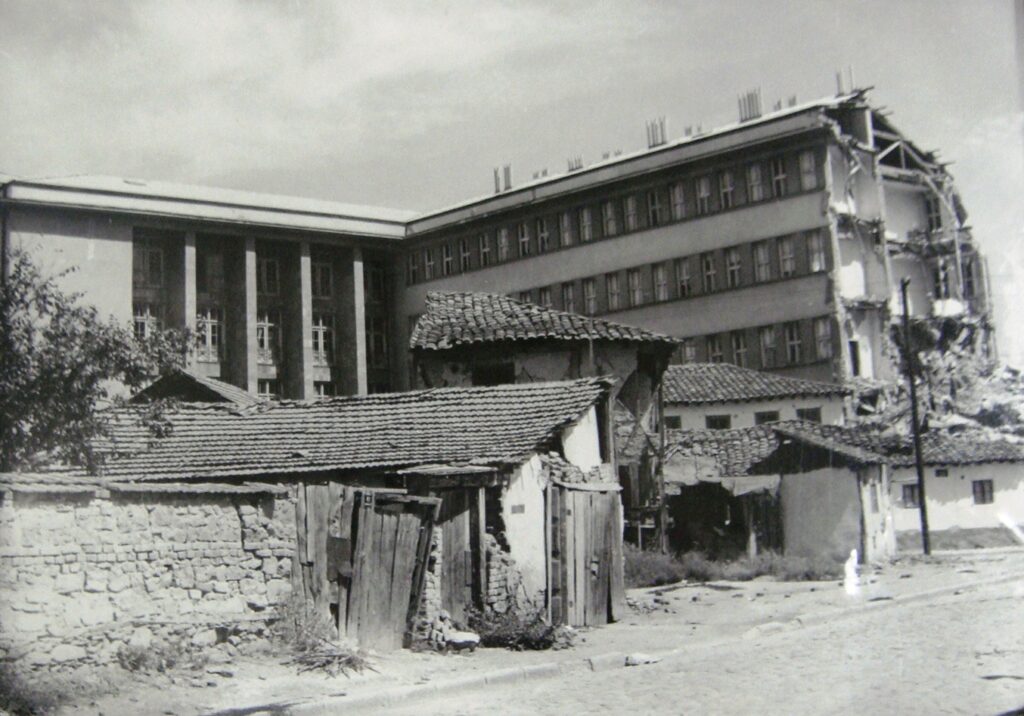
At 5:17 in the morning on 26 July 1963, a magnitude 6.1 earthquake destroyed about 80% of Skopje. More than 1,070 people died, thousands were injured and over 200,000 lost their homes. The disaster – and the worldwide effort to rebuild the city – shaped almost everything you see in Skopje today.
The 1963 earthquake in numbers
| Date and time | 26 July 1963, 5:17 a.m. |
| Magnitude | 6.1 |
| Deaths | Over 1,070 |
| Injured | 3,000–4,000 |
| Left homeless | More than 200,000 |
| City destroyed | About 75–80% |
| Countries that sent aid | 78 |
What happened
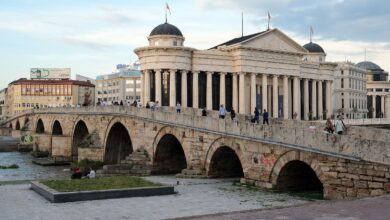
The earthquake struck early on a summer morning while most people were asleep. Within seconds whole neighbourhoods collapsed, including much of the old city centre on the right bank of the Vardar. The Old Bazaar and many Ottoman monuments on the left bank survived better than the modern buildings of the time.
A city of international solidarity
In the middle of the Cold War, help came from both sides: the United States and the Soviet Union, East and West, and 78 countries in total sent doctors, engineers, prefabricated houses and money. The United Nations took up Skopje’s reconstruction as an international project, and Skopje became known as a “city of international solidarity”.
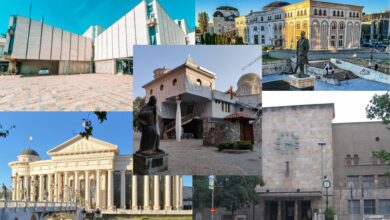
Artists also responded: works donated from around the world became the core of the Museum of Contemporary Art, including pieces by Picasso – and the museum building itself was a gift from Poland.
📶 Staying connected in Skopje
Maps, opening hours and translation apps all need data while you explore. The easiest way to get online in North Macedonia is an eSIM: buy it before your trip, install it in 2 minutes and avoid expensive roaming. Plans start from €2.90. Use code VISITSKOPJE for 10% off → Get a North Macedonia eSIM
Affiliate link – we may earn a small commission at no extra cost to you. More options in our SIM card & eSIM guide.
Rebuilding Skopje: Kenzo Tange’s plan
In 1965 the UN invited architects to plan the new Skopje. The Japanese architect Kenzo Tange won 60% of the prize and a Yugoslav team 40%. Only parts of Tange’s bold vision were built – most famously the Transport Centre with its railway on a concrete bridge, and the long residential blocks of the “City Wall”. Many other brutalist buildings of the 1960s–70s, such as the post office and the university campus, also date from this period.
Where to see the earthquake’s legacy today
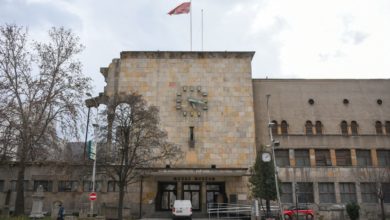
- The Old Railway Station – half-ruined, with its clock frozen at 5:17. It now houses the City Museum, which has an exhibition about the earthquake.
- Museum of Contemporary Art – the art collection donated in solidarity.
- The Transport Centre and brutalist buildings – the architecture of reconstruction.
- The Old Bazaar – the part of the city that survived, see our Old Bazaar walking route.
From brutalism to Skopje 2014
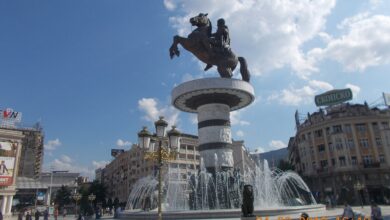
Fifty years after the earthquake, the Skopje 2014 project covered parts of the centre with neo-classical façades and statues, often hiding the modernist buildings of the reconstruction. Walking from Macedonia Square across the river, you can see both layers side by side.
Read more: Skopje 2014 explained – statues and controversy.
Where to Stay in Skopje
For history lovers, the best base is the city centre: most sights, restaurants and bus stops are within walking distance, and you won’t need a taxi in the evening.
- Skopje Marriott Hotel – right on Macedonia Square, the most central upscale choice.
- Hotel Senigallia – rooms on a rebuilt sailing ship moored on the Vardar, in the middle of the city.
- Solun Hotel & Spa – a central hotel with a spa, a short walk from the main square.
Browse all hotels in Skopje city centre, compare neighbourhoods in our Where to Stay in Skopje guide, or see our pick of the best hotels in Skopje.
Some links are affiliate links – we may earn a small commission at no extra cost to you.
Frequently Asked Questions
When was the Skopje earthquake?
On 26 July 1963 at 5:17 a.m.
How many people died in the Skopje earthquake?
More than 1,070 people.
Why is the clock at the old railway station stopped?
It stopped at 5:17, the moment the earthquake struck, and has been kept that way as a memorial.
Our private tour
Private Matka Canyon Tour from Skopje
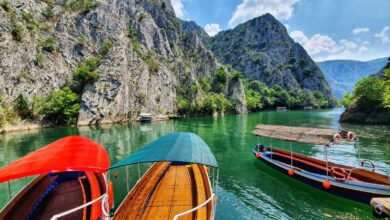
Hotel pickup anywhere in Skopje, a private air-conditioned car and a friendly English-speaking local driver. Boat ride to Vrelo Cave, hiking or a lakeside coffee – at your own pace. From €60 per car (1–4 guests).
🇲🇰 Found this Skopje guide helpful?
Support my independent work and help me keep creating free, useful guides for travelers.
☕ Buy Me a Coffee